What actually happens at a tasting menu dinner?
A tasting menu replaces the usual process of ordering from a menu with a sequence of courses chosen entirely by the kitchen. At Bangkok’s starred restaurants, a typical dinner runs eight to twelve courses, beginning with a series of small amuse-bouches, one or two bites that set the tone for the evening, before moving through smaller and larger savoury courses, a palate-cleanser, and then two or three dessert courses.
Each course arrives when the kitchen is ready. The pace is controlled by the restaurant; your role is to be present for it. Service will explain each dish as it arrives, covering what it is, where the main ingredient came from, sometimes how it was prepared. At chef-patron houses, the chef will often come to the table at some point during the evening.
There is generally no menu to read at the table. At some restaurants, particularly at the three-star level, guests receive a printed menu at the end of the meal as a keepsake.
How long does dinner take?
At most Bangkok starred restaurants, a dinner tasting menu takes between two and three hours. For a table of two, two to two and a half hours is a reasonable expectation at the one-star level. For a table of three or four, where conversation naturally extends the pace, allow closer to three hours. A longer menu at a three-star table like Sorn can go beyond that.
At Mia, a table of two typically sits for around two to two and a half hours. The kitchen paces the meal to allow conversation between courses without stretching the evening unnecessarily. For larger groups, the team adjusts accordingly.
How much does it really cost, all in?
Dinner tasting menus in Bangkok vary significantly by tier. At the one-star level, expect THB 3,500++ to THB 6,500++ per person. Two-star tables generally run THB 5,500++ to THB 8,500++. The three-star tier sits above that, reflecting the scale and duration of the menu at Sorn and Sühring; neither publishes pricing online, so confirm directly when you book. A beverage pairing adds THB 1,500++ to THB 4,500++ per person depending on the restaurant and the option.
At Mia, dinner tasting menus run from THB 5,250++ to THB 5,850++ per person. The non-alcoholic beverage pairing is THB 2,450++. Prices are quoted before service charge and VAT, written as ++.
For a first visit at the one-star level, budget THB 7,000 to THB 10,000++ per person with a pairing as a working figure for the evening, equivalent to approximately $210 to $300 or €185 to €265 at current exchange rates.
Do I need to book far in advance?
Bangkok’s starred restaurants handle availability in different ways. Some open their calendar on fixed dates each month: Sorn, for instance, releases tables on the 15th by email and on the 25th online, covering the following month only. At that level of demand, a specific dinner requires planning to a schedule rather than a spontaneous decision.
Other rooms are considerably more open. At Mia, the booking window runs up to two months ahead, with no release-day system and no waiting list to join. That flexibility makes planning straightforward, but it does not mean availability is guaranteed; weekend evenings and occasions fill ahead. The practical advice is the same regardless of the restaurant: choose your date, then book it.
What should I wear?
Smart casual is the standard across most of Bangkok’s starred rooms: trousers and a collared shirt for men, a dress, blouse or equivalent for women. Shorts, sandals and athletic wear are not appropriate at any starred table. The guidance is less about enforced rules and more about matching the effort the kitchen has put in.
A small number of rooms apply a stricter standard. At Anne-Sophie Pic at Le Normandie in the Mandarin Oriental, men are expected to wear a jacket for dinner. If you arrive without one, the restaurant can generally lend you one for the evening. At a chef-patron house like Mia, the setting is elegant but relaxed; the smarter end of smart casual is entirely sufficient.
What about allergies and dietary restrictions?
Flag allergies at booking, clearly and specifically. A tasting menu is built well in advance; the kitchen needs to know before the evening, not when you sit down. Serious allergies, including shellfish, nuts and gluten, should be listed in the reservation notes when you book and confirmed again if the restaurant does not follow up.
Dislikes and preferences are a lighter matter. If there is something you would simply rather not eat, mention it at booking and the kitchen will generally work around it. On a composed tasting menu, the more adjustments you make, the more the menu shifts from what the kitchen intended, but a reasonable preference will be accommodated.
For vegetarian and vegan diners, Bangkok’s starred field now offers genuine options beyond simple accommodation. For a full guide to which rooms run dedicated plant-based menus and how to book them, see: The Best Vegan and Vegetarian Fine Dining in Bangkok (2026 Guide).
Should I take the wine or beverage pairing?
For a first tasting menu dinner, yes. Take some form of pairing. A tasting menu is built as a sequence, and a pairing matched to that sequence changes the experience of each course in a way that choosing wine by the glass or bottle rarely does. It also removes one decision from the evening.
Bangkok’s starred rooms increasingly offer a non-alcoholic pairing alongside the wine option: teas, infusions, pressed preparations and clarified juices matched to the menu. At Mia, the non-alcoholic pairing is THB 2,450++ and runs across all three tasting menus. If you do not drink or prefer not to, the non-alcoholic option is a genuine alternative, not a reduced one.
If you would rather not take a pairing at all, you are not obliged to. Most rooms will offer wine by the glass or bottle alongside water throughout the meal.
Can I bring children?
Some starred restaurants accept children; others do not, or set a minimum age. Always confirm when booking and assume nothing.
At Mia, the minimum age is ten. A children’s menu is available at THB 2,850++ per child. For younger guests, the restaurant will advise directly.
At the three-star level and in formal hotel dining rooms, minimum ages tend to be higher. For a first starred dinner that includes children, a chef-patron house at the one-star level is generally the more accommodating setting.
Do I have to eat everything? What if I don’t like a course?
No. You are never required to finish a course or eat something you do not want. If a dish arrives and you do not want it, set down your cutlery; the team will notice and clear it without comment.
If you know in advance there is an ingredient you cannot eat or strongly dislike, mention it at booking. The kitchen can often substitute or skip a course when they have time to plan for it. On the night itself, if something arrives that you did not anticipate, let your server know quietly.
A tasting menu is a composed whole, and removing several courses will change what the kitchen intended. A single course declined, or one ingredient swapped, is a normal part of service at this level.
Hotel dining room or standalone house: does it change the experience?
Hotel dining rooms
Bangkok’s hotel-based starred restaurants, including Chef’s Table and Mezzaluna at lebua, Côte by Mauro Colagreco at Capella, and Anne-Sophie Pic at Le Normandie in the Mandarin Oriental, come with infrastructure: concierge, valet, often a skyline or riverside view, and a wine programme backed by a full hotel cellar. The formality of a hotel floor sets a tone before you sit down. For first-time guests who want to be looked after from the moment they arrive, the hotel context removes every logistical variable.
Standalone chef-patron houses
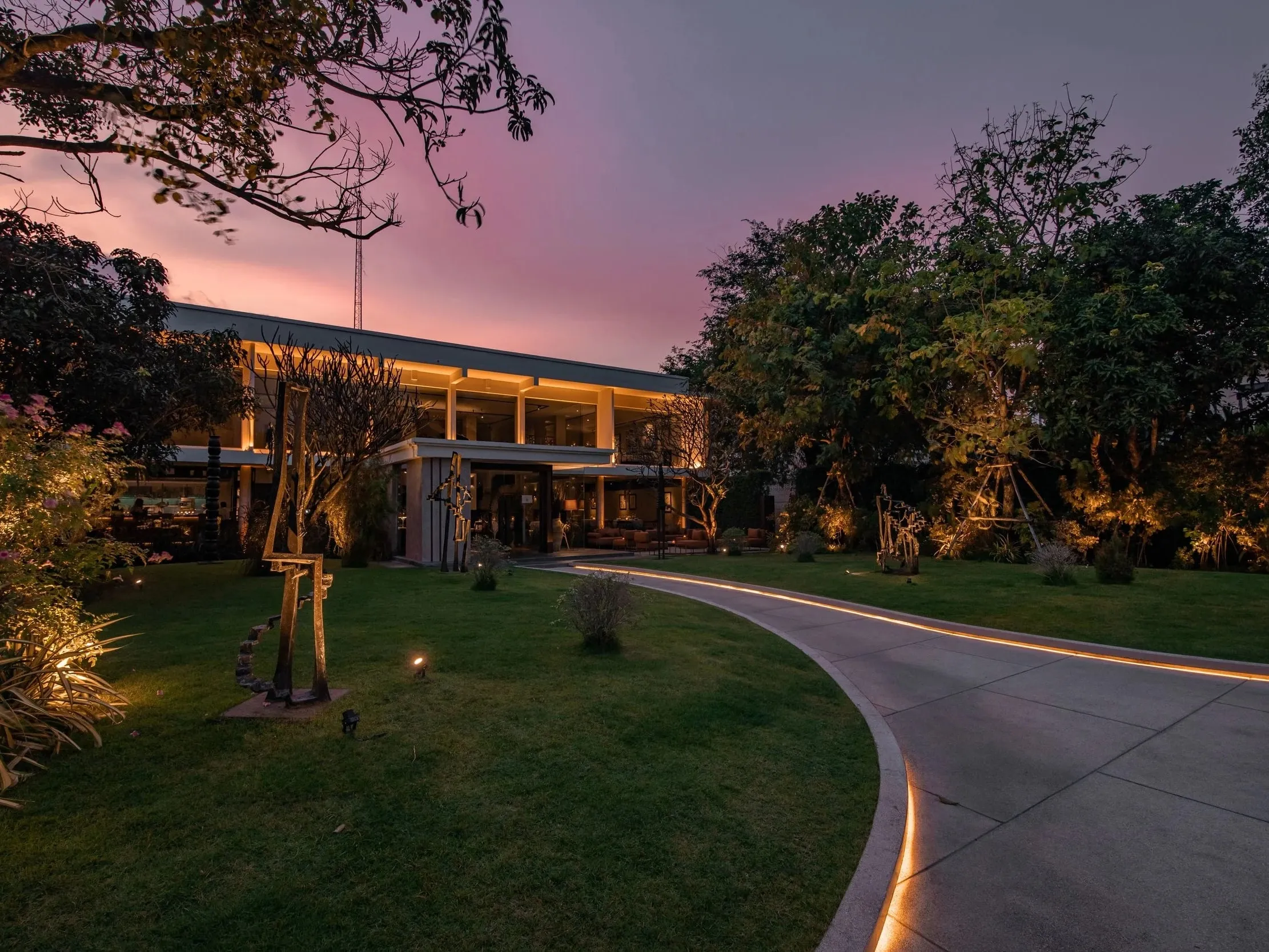
A standalone house is a different proposition. You arrive at a building rather than a lobby; the host who greets you is connected directly to the kitchen. At Mia on Sukhumvit Soi 26, the restaurant is a restored heritage home with four dining rooms, around forty covers and the wine cellar tucked beneath the staircase. Chef-Patrons Top Russell and Michelle Goh are present each service. At Sühring in Yen Akat, the same principle applies inside a restored 1970s villa. At Baan Tepa in Bang Kapi, it is a family home surrounded by a working garden. In each case, the formality is in the cooking and the service, not in the setting.
For a first starred dinner, the distinction matters less than whether the room fits the occasion. A hotel table with a view is memorable for different reasons than an evening in a chef’s private house, and neither is more correct.
Details and prices current as of August 2026. Confirm menus, policies and pricing directly with each restaurant when booking.